



How much cinnamon is safe per day depends on which cinnamon you bought. One level teaspoon of cassia, the ordinary supermarket kind, carries roughly 7.8 mg of coumarin: about 1.3 times the tolerable daily intake two European agencies derived for a 132-lb (60-kg) adult. AGES puts the Ceylon-to-cassia gap at about a hundredfold.
Take the jar off the shelf and read the label. Most say only “ground cinnamon” — and that is the one thing you cannot skip, because two different barks are sold under that word, and by the Austrian agency AGES’s reckoning one carries about a hundred times more coumarin than the other.
Coumarin is the compound that ceiling is built around. Five things matter before baking season: the dose, the two species, the liver, the blood sugar claim, and the lead recalls.
What the evidence says
Solid · The arithmetic on coumarin. BfR derived a tolerable daily intake of 0.1 mg per kg of body weight, and reports that EFSA calculated the same value; cassia averages about 3,000 mg of coumarin per kg of spice.
Moderate · Cinnamon and blood sugar. An umbrella review of 11 meta-analyses, ten of them in type 2 diabetes or PCOS: fasting glucose down 10.93 mg/dL, but HbA1c down only 0.10 of a percentage point.
Limited · Liver harm from cinnamon as a spice. BfR reports no such case described in the scientific literature to date; the liver findings come from coumarin given as a drug and from animal studies.
The catch · One heavy week is not the risk. Both agencies say short-term overshoot carries no health risk — the number describes a habit held for years. And the lead recalls are a different problem from coumarin.
1. Is 1 tsp of Cinnamon a Day Too Much?
For a 132-lb (60-kg) adult, a level teaspoon of cassia every day sits just over the line — and the agencies that drew the line say just over is not where harm begins.
Germany’s Federal Institute for Risk Assessment (BfR) derived a tolerable daily intake of 0.1 mg of coumarin per kg of body weight — what a person can take in daily for life without appreciable risk, or 6 mg at 60 kg. EFSA, BfR notes, calculated the same value. Its monitoring puts cassia near 3,000 mg of coumarin per kg of spice, with a highest measured level of 10,000. A teaspoon weighs 2.6 g, per USDA.
Multiply average by teaspoon — our arithmetic, not a published figure — and you land near 7.8 mg, about 1.3 times that 6 mg. BfR gets there from the other side: 2 g of cassia a day for a 60-kg adult, 0.5 g for a 15-kg child. The scarier write-ups skip the next line on the same page. Slight exceeding for one to two weeks can be seen as safe, BfR says, and going over in the short run “does not pose any health risks.”
2. Cassia Cinnamon vs Ceylon Cinnamon: Which One Is in Your Jar?
AGES puts the gap at about a hundredfold, and puts it down to botany. Its own measurements bracket cassia at 1,880–3,260 mg/kg, while the highest Ceylon sample it found reached 185 mg/kg — a worst-case Ceylon against an ordinary cassia, and even that comparison leaves better than a tenfold gap.
“Cassia” is a group: Cinnamomum cassia (also written C. aromaticum), C. burmannii sold as Korintje, C. loureiroi sold as Saigon. Ceylon is one species, Cinnamomum verum, often labeled true cinnamon. Cinnamaldehyde gives both their smell; coumarin is what separates them.
Telling them apart is easy in stick form, hard in powder. AGES describes Ceylon sticks as thin layers rolled up like a cigar, cassia as much thicker bark; for powder, read the imprint on the package. BfR advises heavy home users to switch to Ceylon.
3. Is Cassia Cinnamon Hard on the Liver?
Coumarin can damage the liver in a small group of especially sensitive people — but BfR ties that finding to coumarin given as a drug for a few weeks, and states plainly that no such case following the consumption of cinnamon has been described in the scientific literature to date.
The mechanism is not known, and the effects are usually reversible. The cancer question lands the same way: very large doses over long periods produced tumors in rats and mice, while for humans BfR reports no indications that coumarin triggers them.
Coumarin is also not warfarin: AGES separates the plant compound from the synthetic blood thinners, warfarin and phenprocoumon, that share the name. And it reaches you from more than the jar — tonka bean, woodruff, cosmetics and supplements count toward the same daily total. If you take cinnamon capsules or liver-relevant medication, talk to your doctor first.
4. How Much Cinnamon to Lower Blood Sugar — and What It May Actually Do
Trial doses run far above a teaspoon, and the payoff on the number clinicians watch most is small.
A 2023 umbrella meta-analysis in Diabetology & Metabolic Syndrome by Zarezadeh M, Musazadeh V, Foroumandi E, Keramati M, Ostadrahimi A and Mekary RA pooled 11 meta-analyses of randomized trials — seven in type 2 diabetes, three in PCOS, one in metabolic syndrome, and none in healthy adults. Fasting plasma glucose fell 10.93 mg/dL (95% CI −16.22 to −5.65) and HOMA-IR fell 0.61, while HbA1c, the three-month average, moved 0.10 of a percentage point (95% CI −0.17 to −0.03). Doses ran 0.12–14.4 g a day, median 3.76 g. The pooled trials ran four to 52 weeks, and the authors rated eight of the eleven meta-analyses high quality and three low.
Put that median beside the ceiling. At the BfR average, 3.76 g of cassia powder carries about 11 mg of coumarin, close to double the 6 mg — our arithmetic again, and only for the all-powder case, since several pooled analyses mixed aqueous extracts with ground spice. Dose decided everything in the Singapore data on curry too, and it is why we keep returning to what the 21,442-person COSMOS trial settled about cocoa flavanols.
5. Cassia Cinnamon Dangers: What the Lead Recalls Were Really About
The lead found in ground cinnamon since 2023 is a contamination story, not a coumarin story — different substance, different cause, wildly different scale.
The FDA confirmed 90 cases of elevated blood lead (3.5 µg/dL or higher) as of January 31, 2024; by March 2024 it had received more than 200 reports tied to WanaBana apple cinnamon puree pouches; its leading hypothesis is economically motivated adulteration of the cinnamon, which ran 2,270–5,110 ppm lead. A July 2024 alert added El Servidor ground cinnamon at 20 ppm.
Coumarin in packaged food, meanwhile, looks better than the headlines: a 2025 AGES campaign analyzed 151 samples across Austria and found the legal maximum exceeded in four. Those maximums sit in Annex III of Regulation (EC) 1334/2008, in force since 2011 — 50 mg/kg for seasonal cinnamon bakery ware, 5 mg/kg for desserts. For the spice itself, BfR is blunt: “there are no limit values for cinnamon as a spice.” The tolerable daily intake is a derived recommendation, not a law.
How to Use It in Your Kitchen
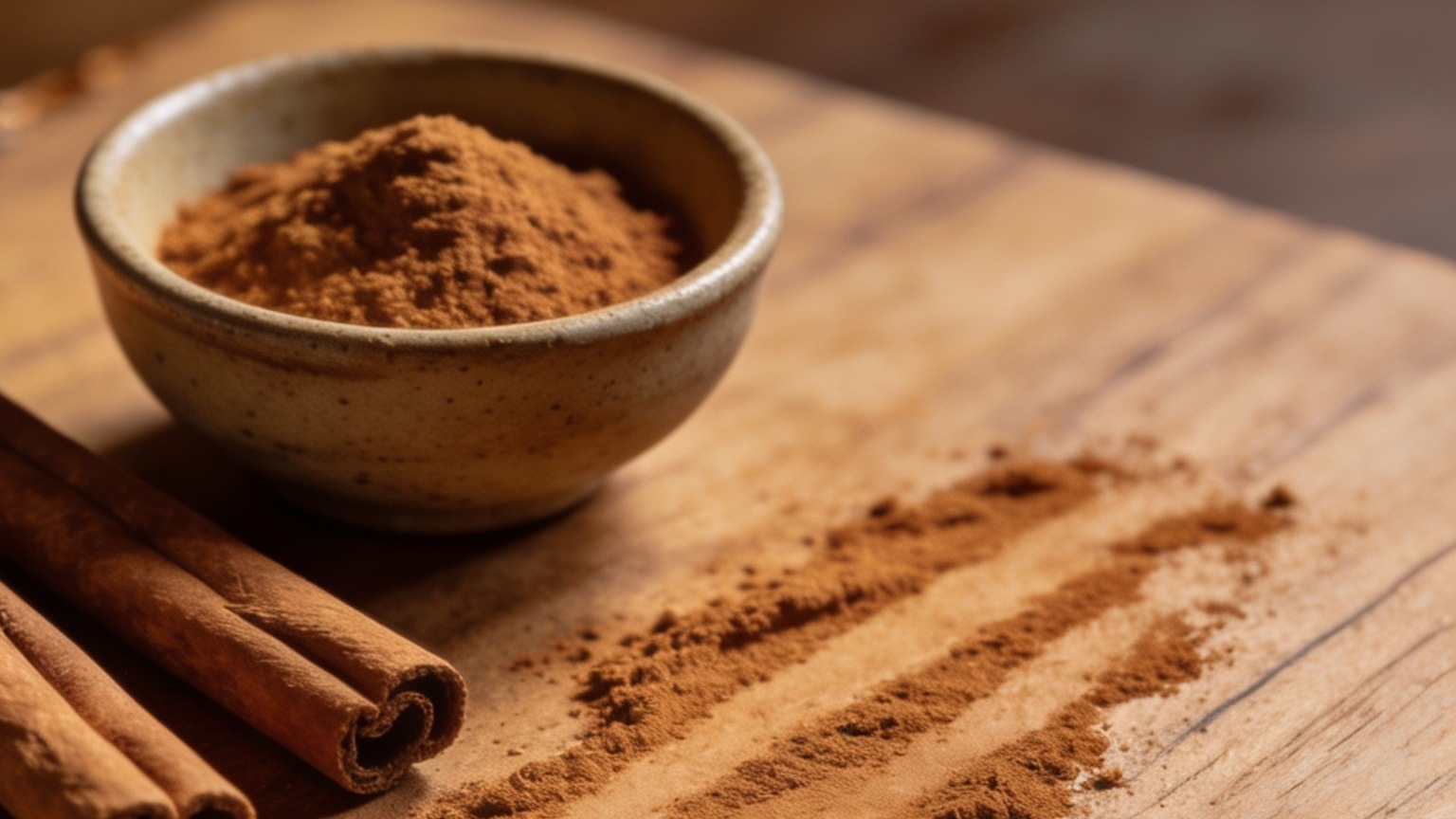
If cinnamon is a daily habit — coffee, porridge, smoothie — buy Ceylon and stop doing arithmetic. For children, AGES caps it at half a teaspoon (0.5 g) a day, whichever bark is in the jar.
For an occasional teaspoon, cassia is fine, and it is the more assertive baking spice anyway. A stick behaves differently from powder: simmered whole in a braise and lifted out before serving, it gives aroma while most of the bark leaves with it, as in our Vietnamese bò kho. Powder stays in the dish — which is why the teaspoon in a daily bowl of oatmeal is the one worth thinking about.
As for the season, US and UK baking both peak in November and December, and AGES addresses that head-on: with normal consumption of cinnamon-containing products, from Austrian pastries to Christmas biscuits, it expects no risk of damage to health, and a higher intake over the Christmas period generally balances out across the year.
Cinnamon Nutrition Facts
Frequently Asked Questions
What does eating cinnamon every day do to your body?
Nutritionally, very little: a teaspoon is 6.4 calories, 1.4 g of fiber and 0.45 mg of manganese, about a fifth of the Daily Value. The daily part matters for coumarin, and only if the jar is cassia.
How much Ceylon cinnamon should I take daily for blood sugar?
No trial has set a Ceylon-specific dose, so there is no honest number to give. The 2023 umbrella review pooled studies with a median of 3.76 g a day of mixed cinnamon types, in people with type 2 diabetes or PCOS. Talk to your doctor before adding it alongside diabetes medication.
Does the cinnamon in cookies and cereal count?
It counts, but it is capped: EU law limits coumarin to 50 mg/kg in seasonal cinnamon bakery ware and 5 mg/kg in desserts, and AGES found four exceedances in 151 samples in 2025. The loose spice you add yourself — not the cookies (biscuits) — is the uncapped part.
The Bottom Line: How Much Cinnamon Is Safe Per Day
A daily teaspoon of cassia sits about 1.3 times over a figure built for a lifetime of daily use — a habit worth adjusting, not an emergency, and buying Ceylon removes the question. The blood sugar effect is real but modest, measured in people with a diagnosis, at doses well above a sprinkle. Cinnamon belongs beside the foods we have already weighed this way: the anti-inflammatory list, and 25 years of data on sugary drinks.
Sources
- German Federal Institute for Risk Assessment (BfR) — “FAQ on coumarin in cinnamon and other foods” (tolerable daily intake of 0.1 mg/kg body weight; 6 mg a day for a 60-kg adult; EFSA’s matching value; cassia averaging 3,000 mg/kg and up to 10,000 mg/kg; 2 g for an adult and 0.5 g for a 15-kg child; no reported liver-damage cases from cinnamon; no limit values for cinnamon as a spice). https://www.bfr.bund.de/en/service/frequently-asked-questions/topic/faq-on-coumarin-in-cinnamon-and-other-foods/
- Austrian Agency for Health and Food Safety (AGES) — “Coumarin” (1,880–3,260 mg/kg measured in cassia and a high of 185 mg/kg in Ceylon; half a teaspoon a day for children; the distinction from warfarin and phenprocoumon; the 2025 campaign of 151 samples with four exceedances; Christmas intake balancing over the year). https://www.ages.at/en/human/nutrition-food/residues-contaminants-from-a-to-z/coumarin
- USDA FoodData Central — “Spices, cinnamon, ground” (SR Legacy, FDC ID 171320): 2.6 g per teaspoon, 7.8 g per tablespoon, and the per-100 g values behind the table above. https://fdc.nal.usda.gov/food-details/171320/nutrients
- Diabetology & Metabolic Syndrome, 2023 — Zarezadeh M, Musazadeh V, Foroumandi E, Keramati M, Ostadrahimi A, Mekary RA. “The effect of cinnamon supplementation on glycemic control in patients with type 2 diabetes or with polycystic ovary syndrome: an umbrella meta-analysis on interventional meta-analyses.” 2023;15(1):127. https://pubmed.ncbi.nlm.nih.gov/37316893/
- US Food and Drug Administration — “Post-Incident Response Activities: Elevated Lead and Chromium Levels in Cinnamon Applesauce Pouches” (90 confirmed cases as of January 31, 2024; over 200 reports as of March 2024; economically motivated adulteration). https://www.fda.gov/food/outbreaks-foodborne-illness/post-incident-response-activities-elevated-lead-and-chromium-levels-cinnamon-applesauce-pouches
- US Food and Drug Administration, July 25, 2024 — “FDA Public Health Alert: Additional Ground Cinnamon Product Due to Presence of Elevated Levels of Lead” (El Servidor brand, 20 ppm; 2,270–5,110 ppm lead in the WanaBana cinnamon for comparison). https://www.fda.gov/food/alerts-advisories-safety-information/fda-public-health-alert-additional-ground-cinnamon-product-due-presence-elevated-levels-lead
- Regulation (EC) No 1334/2008 on flavourings, Annex III — maximum coumarin levels of 50 mg/kg in traditional and seasonal cinnamon bakery ware and 5 mg/kg in desserts, in force since 2011. https://eur-lex.europa.eu/legal-content/EN/TXT/?uri=CELEX%3A32008R1334